Some Notable Rationalist Thinkers
[The notes below are extracted from respective Wikipedia articles, and then minimally modified. We will keep modifying and enhancing this list.]
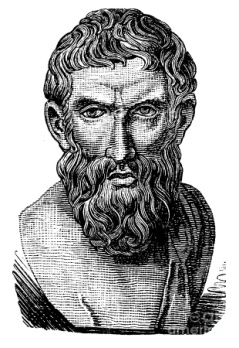
Epicurus (341 BC – 270 BC) was an ancient Greek philosopher as well as the founder of the school of philosophy called Epicureanism. Only a few fragments and letters of Epicurus’s 300 written works remain. Much of what is known about Epicurean philosophy derives from later followers and commentators. He was a materialist philosopher, and a rude criticizer of contemporary popular religious beliefs, superstitions and fraudulence.
For Epicurus, the purpose of philosophy was to attain the happy, tranquil life, characterized by ataraxia — peace and freedom from fear — and aponia — the absence of pain — and by living a self-sufficient life surrounded by friends. He taught that pleasure and pain are the measures of what is good and evil; death is the end of both body and soul and should therefore not be feared; the gods neither reward nor punish humans; the universe is infinite and eternal; and events in the world are ultimately based on the motions and interactions of atoms moving in empty space.

Democritus (c. 460 – c. 370 BCE) was an Ancient Greek philosopher born in Abdera, Thrace, Greece. A pupil of Leucippus, he was an influential pre-Socratic philosopher who formulated an atomic theory for the universe. Being a materialist philosopher criticizing contemporary religious beliefs, he is said to be the first thinker to introduce the concept of ‘atom’, a rigorous scientific concept that could not be actually discovered before twentieth century.
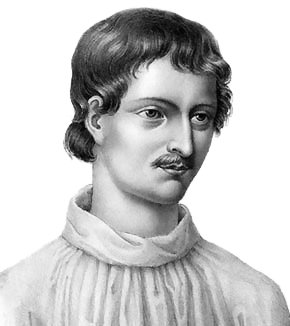
Giordano Bruno (1548 – February 17, 1600, born Filippo Bruno, was an Italian Dominican friar, philosopher, mathematician, astrologer and astronomer. Arguably the most famous martyr of science, and a paragon of fearless struggle against the religious authority, his cosmological theories went well beyond the Copernican model : while supporting its heliocentrism, he also correctly proposed that the Sun was just another star moving in space, and claimed as well that the universe contained an infinite number of inhabited worlds populated by other intelligent beings. The Roman Inquisition found him guilty of heresy, and he was burned at the stake. After his death he gained considerable fame, particularly among 19th- and early 20th-century commentators who, focusing on his astronomical beliefs, regarded him as a martyr for free thought and modern scientific ideas.
Galileo Galilei (15 February 1564 – 8 January 1642), often known mononymously as Galileo, was an Italian physicist, mathematician, astronomer, and philosopher who played a major role in the Scientific Revolution. His most famous achievements include improvements to the telescope and consequent astronomical observations, discovering fundamental laws of mechanical motion and support for Copernicanism. Galileo has been called the “father of modern observational astronomy“, the “father of modern physics“, the “father of science”, and “the Father of Modern Science”. Galileo’s championing of heliocentrism was controversial within his lifetime. He was tried by the Inquisition, found “vehemently suspect of heresy”, forced to recant, and spent the rest of his life under house arrest.
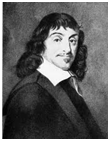
René Descartes (31 March 1596 – 11 February 1650) was a French philosopher, mathematician, and writer who spent most of his life in the Dutch Republic. He has been dubbed The Father of Modern Philosophy, and much subsequent Western philosophy is a response to his writings, which are studied closely to this day. Also one of the key figures in the Scientific Revolution, he refused to accept the authority of previous philosophers and also refused to accept the obviousness of his own senses. Descartes laid the foundation for 17th-century continental rationalism.

François-Marie Arouet (21 November 1694 – 30 May 1778), known by his nom de plume Voltaire, was a French Enlightenment writer, historian and philosopher famous for his wit, his attacks on the established Catholic Church, and his advocacy of freedom of religion, freedom of expression, and separation of church and state. He is considered to be one of the founders of modern secularism. Voltaire was a versatile writer, producing works in almost every literary form, including plays, poems, novels, essays, and historical and scientific works. He wrote more than 20,000 letters and more than 2,000 books and pamphlets. He was an outspoken advocate, despite the risk this placed him in under the strict censorship laws of the time. As a satirical polemicist, he frequently made use of his works to criticize intolerance, religious dogma, and the French institutions of his day.
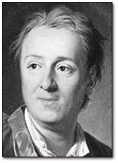
Denis Diderot (5 October 1713 – 31 July 1784) was a French philosopher, art critic, and writer. He was a prominent person during the Enlightenment and is best known for serving as co-founder, chief editor, and contributor to the Encyclopédie along with Jean le Rond d’Alembert. A rude criticizer of religion and strong advocate of atheism and reason, he is considered by some to be the first ever atheist thinker in the modern sense.
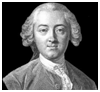
Claude Adrien Helvétius (26 January or 26 February 1715 (sources differ) – 26 December 1771) was a rationalist French philosopher and littérateur. Helvétius’ philosophy held that man’s faculties are interest-driven but rational, and hence there’s no place for the supernatural or the religious. It held, for example, that all man’s faculties may be reduced to physical sensation, even memory, comparison, judgment. So self-interest, founded on the love of pleasure and the fear of pain, is the sole spring of judgment, action, and affection. Human beings are motivated solely by the pursuit of pleasure and the avoidance of pain. And also, we have no freedom of choice between good and evil. There is no such thing as absolute right – ideas of justice and injustice change according to customs. This view of man was largely Hobbesian – man is a system deterministically controllable by a suitable combination of reward and punishment, and the ends of government are to ensure the maximisation of pleasure.
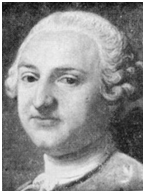
Paul-Henri Thiry, Baron d’Holbach was a French-German author, philosopher, encyclopedist and a prominent figure in the French Enlightenment. He was born Paul Heinrich Dietrich in Edesheim, near Landau in the Rhenish Palatinate, but lived and worked mainly in Paris, where he kept a salon. He was well known for his atheism and for his voluminous writings against religion, the most famous of them being The System of Nature (1770).
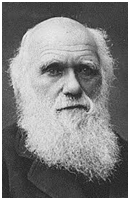
Charles Robert Darwin, FRS (12 February 1809 – 19 April 1882) was an English naturalist and geologist, best known for his contributions to evolutionary theory. He established that all species of life have descended over time from common ancestors, and in a joint publication with Alfred Russel Wallace introduced his scientific theory that this branching pattern of evolution resulted from a process that he called natural selection, in which the struggle for existence has a similar effect to the artificial selection involved in selective breeding. Darwin has been described as one of the most influential figures in human history. Though not at all bothered to talk about religion, he is still regarded as the one who offered the biggest blow to religion. By asserting that man appeared according to natural processes without any divine intervention, he helped demolish religious creationism once and for all.
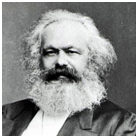
Karl Heinrich Marx (5 May 1818 – 14 March 1883) was a German philosopher, economist, sociologist, historian, journalist, and revolutionary socialist. Marx’s work in economics laid the basis for the current understanding of labour and its relation to capital, and has influenced much of subsequent economic thought. He published numerous books during his lifetime, the most notable being The Communist Manifesto (1848) and Das Kapital (1867–1894). Marx’s theories about society, economics and politics – collectively known as Marxism – hold that human societies progress through class struggle: a conflict between an ownership class that controls production and a dispossessed labouring class that provides the labour for production. He called capitalism the “dictatorship of the bourgeoisie,” believing it to be run by the wealthy classes for their own benefit; and he predicted that, like previous socioeconomic systems, capitalism produced internal tensions which would lead to its self-destruction and replacement by a new system: socialism. Marx has been described as one of the most influential figures in human history. Revolutionary socialist governments espousing Marxist concepts took power in a variety of countries in the 20th century, leading to the formation of such socialist states as the Soviet Union in 1922 and the People’s Republic of China in 1949. Many labour unions and workers’ parties worldwide are influenced by Marxism, while various theoretical variants, such as Leninism, Stalinism, Trotskyism, and Maoism, were developed from them. Marx is typically cited, with Émile Durkheim and Max Weber, as one of the three principal architects of modern social science. He introduced a new level of rational understanding of the long term economic and social history of the mankind. He held that religion is false and harmful, but it must be understood not as mere human errors and folly but only in terms of psychological solace of the helpless poor and the oppressed.
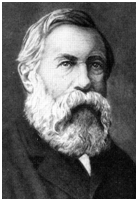
Friedrich Engels (28 November 1820 – 5 August 1895) was a German social scientist, author, political theorist, philosopher, and father of Marxist theory, alongside Karl Marx. In 1845 he published The Condition of the Working Class in England, based on personal observations and research. In 1848 he co-authored The Communist Manifesto with Karl Marx, and later he supported Marx financially to do research and write Das Kapital. After Marx’s death, Engels edited the second and third volumes. Additionally, Engels organized Marx’s notes on the “Theories of Surplus Value” and this was later published as the “fourth volume” of Capital. He has also made important contributions to family economics. He also developed a Marxist understanding of the content and history of science and religion.
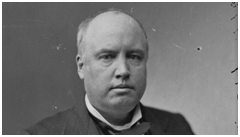
Robert Green “Bob” Ingersoll (August 11, 1833 – July 21, 1899) was a lawyer, a Civil War veteran, political leader, and orator of United States during the Golden Age of Freethought, noted for his broad range of culture and his defense of agnosticism. He was nicknamed “The Great Agnostic“. He is one of the most notable names of critique of religion and secular thought.
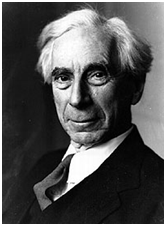
Bertrand Arthur William Russell, 3rd Earl Russell, OM, FRS (18 May 1872 – 2 February 1970) was a British philosopher, logician, mathematician, historian, and social critic. At various points in his life he considered himself a liberal, a socialist, and a pacifist, but he also admitted that he had never been any of these in any profound sense. He was born in Monmouthshire, into one of the most prominent aristocratic families in Britain. Russell led the British “revolt against idealism” in the early 20th century. He is considered one of the founders of analytic philosophy along with his predecessor Gottlob Frege and his protégé Ludwig Wittgenstein. He is widely held to be one of the 20th century’s premier logicians. He co-authored, with A. N. Whitehead, Principia Mathematica, an attempt to ground mathematics on logic. His philosophical essay “On Denoting” has been considered a “paradigm of philosophy”. His work has had a considerable influence on logic, mathematics, set theory, linguistics, artificial intelligence, computer science (see type theory and type system), and philosophy, especially philosophy of language, epistemology, and metaphysics. Russell was a also a prominent anti-war activist; he championed anti-imperialism and went to prison for his pacifism during World War I. Later, he campaigned against Adolf Hitler, then criticized Stalinist totalitarianism, attacked the involvement of the United States of America in the Vietnam War, and was an outspoken proponent of nuclear disarmament. In 1950 Russell was awarded the Nobel Prize in Literature “in recognition of his varied and significant writings in which he champions humanitarian ideals and freedom of thought.” His eloquent and humorous critiques against religious irrationality, obscurantism and authoritarianism make him one of the greatest rationalist thinkers of all time.
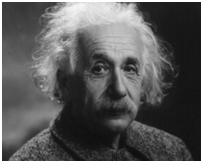
Albert Einstein (14 March 1879 – 18 April 1955) was a German-born theoretical physicist who developed the general theory of relativity, one of the two pillars of modern physics (alongside quantum mechanics). While best known for his mass–energy equivalence formula E = mc2 (which has been dubbed “the world’s most famous equation”), he received the 1921 Nobel Prize in Physics “for his services to theoretical physics, and especially for his discovery of the law of the photoelectric effect“. The latter was pivotal in establishing quantum theory. He is one of the founders of our modern rational and scientific understanding of the universe. His zeal and commitment for a rational worldview and distaste for obscurantism is proverbial. Though contributing to the foundation of the highly successful quantum theory, he vehemently fought against all its proposed theoretical interpretations that he thought were inclined to obscurantism. Einstein published more than 300 scientific papers along with over 150 non-scientific works. His great intellectual achievements and originality have made the word “Einstein” synonymous with genius.

Carl Edward Sagan (November 9, 1934 – December 20, 1996) was an American astronomer, astrophysicist, cosmologist, author, science popularizer and science communicator in astronomy and natural sciences. He spent most of his career as a professor of astronomy at Cornell University where he directed the Laboratory for Planetary Studies. He published more than 600 scientific papers and articles and was author, co-author or editor of more than 20 books. He advocated scientific skeptical inquiry and the scientific method, pioneered exobiology and promoted the Search for Extra-Terrestrial Intelligence (SETI). Sagan is known for his popular science books and for the award-winning 1980 television series Cosmos: A Personal Voyage, which he narrated and co-wrote. The book Cosmos was published to accompany the series. Sagan wrote the novel Contact, the basis for a 1997 film of the same name. In his greatly enjoyable popular work, he always argued in favor of rational and scientific worldview and eloquently opposed superstition, pseudoscience, charlatanry and all attempts at interpreting scientific facts and theories in a manipulative and obscurantist way. His popular works are regarded as part and parcel of contemporary rationalist movement.